Fear and
Dehydration in Colorado’s Biggest Hole
More adventures
in the Black Canyon of the Gunnison
The Flakes V 5.10+ X
Early
summer in Durango is great.
Blissful. Idyllic. A typical afternoon usually involves waking
up from a sound nap and lounging in the shade of the yard behind Rowan’s house,
drinking homemade smoothies and cold beer while watching birds flutter and the
sky fade towards evening, maybe rallying for a pump-out sesh at the Golf Wall
(our local overhanging grid-bolted limestone crag) as the day’s heat subsides,
maybe discussing what to make for dinner and curling up with a book. It takes a lot to pull me away from this eden,
and for most sane people the thought of waking at dawn to descend into
Colorado’s deepest chasm and claw our way back to top by our fingertips before
dark is not in the least a temptation.
For
better or for worse, I’m not completely sane, and neither is Rowan Hill:
esteemed baker of breads, do-it-yourself project enthusiast, and fellow cliff
wrestler. A strong boulderer, Rowan
recently caught the fever of multi-pitch trad climbing. Having climbed just a few multi-pitch bolted
moderate routes in his Swiss homeland, he was game to come to the Black Canyon
with his roommate Tucker Hancock and myself this May for a primer in climbing
long routes. We warmed up as a party of
three with the pleasurable Comic Relief
our first day, enjoyed Journey Home
the next, and on the third I joined other friends on The Cruise while Rowan and Tucker demonstrated their quickly
learned competence by climbing Midsummer
Night’s Dream. Not to be satisfied
by a mere three days of grade IV routes, the pair returned the next weekend and
sent The Cruise in good style. I think back to my days of cutting my teeth
on long routes, leading off-route on Castleton tower in the dark, untangling
rappel ropes while dangling in the windy dark in Red Rocks, squinting desperately
through hail at a stuck rope on the Diamond as night fell, stumbling back to
Dan Rothberg’s car after midnight for the 12th time…I shake my head…
Ever
since climbing Astrodog (V 5.11+)
with Noah Gostout last June, an ascent which pulled Grade V out of the realm of
dreams into the possible, I’d been
stewing on the idea of climbing The
Flakes (V 5.10+ X), generally
considered the ‘Dog’s technically
easier, but more grueling and more dangerous, ugly brother. While the grade seemed certainly manageable,
the thing that kept me away for a year was the 5.9 X chimney halfway up the
route. I’ve climbed a lot of chimneys,
and runnout is part of the game in most of them, but the idea of running it out
that far, where a fall would be…not
an option…was not something I liked to think about before bed. However, after a solid season in the Creek
and consistent hard cragging around Durango all spring, followed by three clean
sends in the Black two weeks earlier, I could visualize myself up in that
chimney and remain calm, palms dry. I
knew it was time to do it.
Luckily,
a man in mired in the clutches of climbing stoke is easily motivated to do
ludicrous things. All it took was a
suggestive text message Friday afternoon, and Rowan and I were pouring over the
guidebook that evening, discussing the rack.
“This will be a great intro to Grade V, man.” The realist voice: yeah right. The justifying voice (climbers develop this
one real well): he’s Swiss, he’s tough.
Saturday
evening we jammed over HWY 550 through the rugged heart of the San Juan
mountains past Silverton and on towards Ouray as the peaks slowly faded into
crimson alpenglow. A quick stop for gas
and victory snacks (I’ve recently discovered the dark chocolate Mounds Bar) in Montrose and we were soon bedding
down in a vacant campsite on the South Rim of Colorado’s biggest hole.
Rappelling
into the Black Canyon takes a certain willing suspension of rationality. At the rim you are safe, and in front of you
is a 2000-ft deep chasm with a torrential river at the bottom and nothing but
sheer walls out: danger. Quick glance at the sun hovering over the
eastern horizon, trace it’s arc through the sky to the west: it goes from there
to there, we have that much time. A
gallon of water. Gel shots with
caffeine. 2 Clif Bars. Headlamps. We can make it. The best way to start is to just throw the
ropes and begin descending before your brain realizes what you’re doing and has
legitimate grounds to protest.

We
crushed out the rappels in 1:45 and began swinging leads up the first 4 pitches;
soon I was scrambling up to Rowan’s belay beneath the infamous “X”
chimney. Sure enough, there it was: a
gaping, gorilla-size fissure that kept going upward beyond the field of vision,
no protectable features in sight. I knew
this moment was going to be like jumping off a cliff into water: if I
contemplate the distance too long my brain will freak out and demand a truce;
the only way to jump is to just walk up and jump. I grabbed the rack, took a gulp of water and
started stemming up into the void.


Call it
karma or the anthropic principle; the earth was built for climbers. The first stretch of chimney, the widest, has
a ladder of subtle face holds on one side and climbs like 5.7 up to a
legitimate nut placement before the holds run out and I had to commit to pure
chimney technique. Soon I fell into the
rhythm of work: scum knees, palms down, grunt, squirm. Mental chatter refined to just the necessary:
yes, this is just 5.9. The friction’s pretty good. At this distance the nut won’t help. Keep my heart rate under control. I knew
enough not to look down; at some point I looked up and saw the chimney
continuing interminably, and I felt the first cold sweat of panic bead on my
neck. Reel it in, that’s not allowed. Focus
on the present. All that exists in the
world: palm, knee, butt, heel. Nuances
in the weathered stone to push on. In
this mode, the movement became my meditation; focus kept fear at bay, on the
outskirts of vision, like a bat fluttering by at dusk. Time and distance passed, I was at a good
rest within reach of a fortuitous chockstone, slung it, continued on.


It’s a
long pitch. At one point I chose the
tighter path for security and got stuck, burned lots of energy grunting and
gasping, eventually accepted reality and retreated from the bottleneck by
slithering downward, exhaling and relaxing my core for a second and sliding a
few inches down…towards nothing. At this
point the work of progress had become so all-consuming that there was no room
for fear, only the desire to escape the tight squeeze and gain the wider
chimney where I could finally move…after much work I made it and was beginning
to catch my labored breath when the whole canyon began to roar. I perched there incredulous, wondering what
calamity was occurring, expecting the walls to crumble, when of all things a
fighter jet executed a sharp turn through the canyon and sped out of view, its
gale-force rumble receding slowly with it.
Wedged in the crack, I envied the young man on a million-dollar
joyride. We took this unexpected visit
to be a good omen, and with new resolution I began steadily progressing up to
where the chimney widens adjacent to a small ledge.

Tunnel
vision is a phenomenon I often experienced in my first years climbing; while
gripped on lead, I would sometimes miss a key foothold, a helpful stem, or a
nearby crack. That pitch on The Flakes I must have been mired deep
in the tunnel, because somehow I looked at the gaping flare running up to an
offwidth, glanced at the convenient ledge equipped with fixed gear, and decided
that the pitch kept going. I think the
constant exposure and effort had reduced my mental state to base primate reactivity,
the grim satisfaction of stomaching exhaustion and lunging into a foe
again. The sensation reminded me of
paddling out into winter swells on the California coast, getting rocked by a
wave and scrambling back onto my board in a churning chaos of foam, sizing up the
next three incoming waves which I could probably not break through and paddling
headlong into them anyway with gritted teeth.
I
clipped the fixed gear and moved up into the flare, pushing further and further
on smeared feet with half my back shoved into the wall, until I realized that
things were really serious and it occurred to me that I’d passed the anchor.
“How
much rope?”
“You’re
out.”
Shit.
It was
still 10 feet to the offwidth, where I could place my biggest cam. No way in hell I was gonna downclimb the
flare. Only one option makes things
simple. I hollered down “Simul!” My mind went blank and I shuffled and
smeared, jamming my shoulder and reaching my outside arm overhead to pinch the
arête, until I reached the apex of the flare.
Body tight as a bow, I grabbed the behemoth #6 Camalot, reached up to
the offwidth, and released the triggers to hear four soft clicks of the lobes
nesting in place. Suddenly the tension
and nothingness washed over me like a wave! I clipped the piece and fired up the offwidth
walking the cam with me, the runnout was over!
It was grueling work, in hot sun now, but I remember floating up the
stacks, arm-bars, and knee-heel cams as if in an effortless dream.
Rowan
cruised up the chimney with remarkable speed, and I was glad because the roof
of my mouth was dry and cracking and he trailed the pack with our precious
water. He reached the belay dripping and
exhausted. My head was still shaken from
the chimney lead but I found the resolve to lace up my shoes, grab the rack,
and start up into the next pitch, the route’s first technical crux. It was delicate and precise but well
protected, and I pulled through into easier terrain and stretched the rope to
the next ledge, then Rowan ran it up a fun pitch to the base of the pitch labeled
“dreaded crux chimney” on the topo: pitch 10, an overhanging corner of mungy
pegmatite leading up to the route’s crux.
It was 4 PM, we had a pint of water left, 400 or so feet to go, and we’d
only eaten a cliff bar and some gel-shots each since 6:30 AM, for fear of
drying out. Nothing to do but go
up. The rock was rotten for a while but
the climbing was fun, protection presented itself when I needed it, and the
pitch flowed until the crux, which required pulling the roof that capped the
dihedral.
Fun Factor 1: fun at the time,
fun to talk about later
Fun Factor 2: not fun at the
time, but fun to talk about later
Now that
I’ve passed through the initial growing pains of learning to climb, most climbs
for me are solid Fun Factor 1. Moments
of fear certainly happen, but I’ve learned to quickly accept fear and transform
it into focus and movement. It’s been a
long time since I’ve experienced the sickening sensation of mental exhaustion
and despair that plagued my early climbing exploits, the prodding voice of cowardice
which, recognizing that reality is scary and difficult, begs to escape, to wake
up in some safe and fuzzy place, to find any reality other than the one happening
right now.
High on The Flakes, suspended horizontally off
of one hand with my last gear 6 feet beneath, staring up at a steep crack with
a thousand feet of air beneath my back, that insidious voice whispered louder
and louder within my skull. The sum
total of exhaustion, thirst, exposure, fear, and effort: the situation was just
so hard. I just wanted to give up, let go and wake up
in some more sane reality, but I was starting to pump out and couldn’t afford
to indulge that voice for long. Contorting
my feet to lock me in place, I managed to plug in a piece and summon a burst of
power to surge upward towards good jams.
50 feet later I groped up to the belay and collapsed on the ledge,
proper spent.
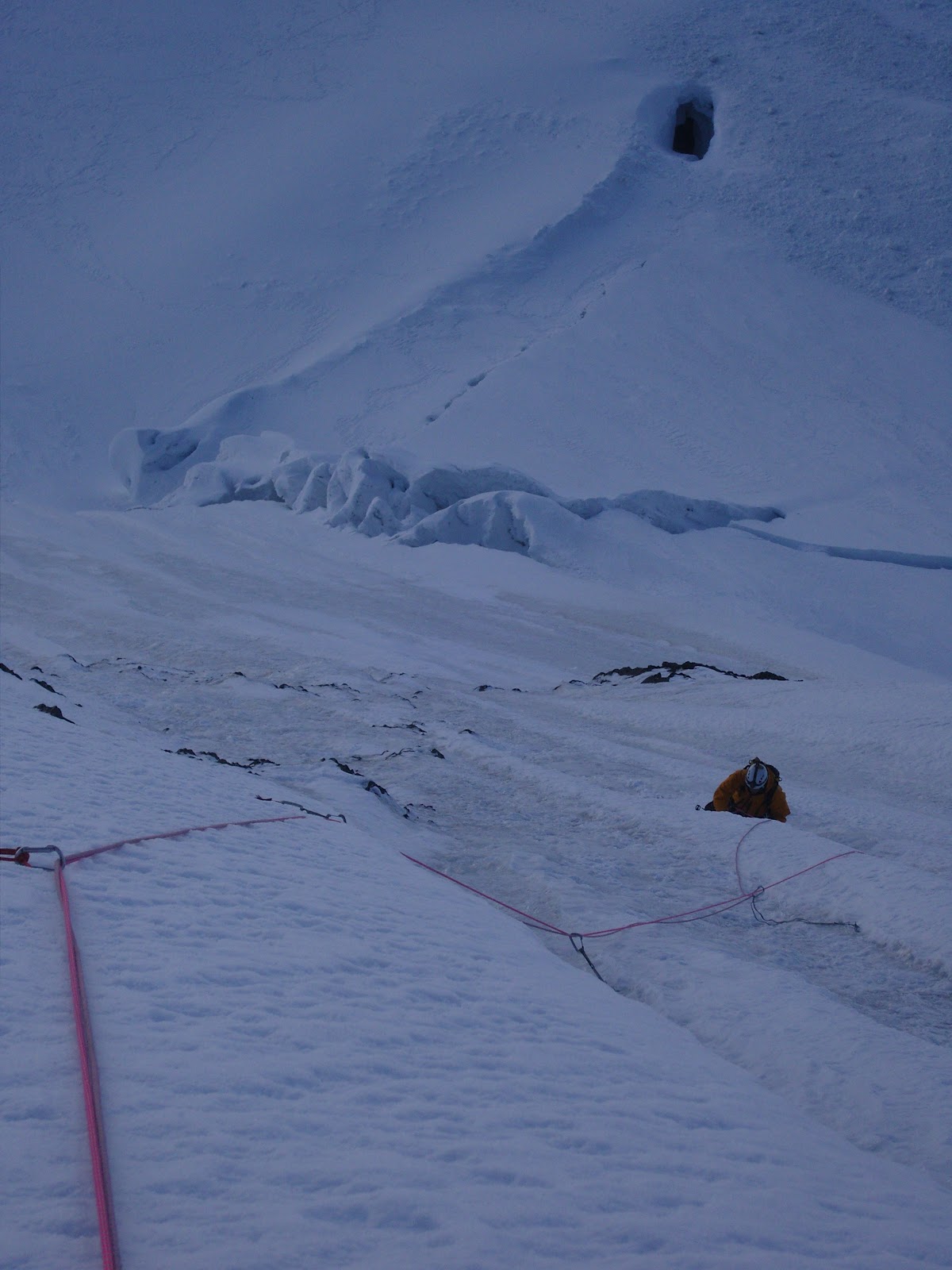
At the belay after the crux pitch, spent.
Rowan
also sent the crux pitch and was psyched to rack up for the last 5.10 pitch,
which he styled. The hard climbing over,
we embarked up the last few hundred feet of broken terrain to the summit,
somehow getting the rope stuck twice.
There’s nothing so frustrating as downclimbing featureless terrain
searching for pro to anchor and un-stick a rope, mouth dry, lips cracking, with
the lookout guardrail in plain sight 200 feet above. Solely intent on reaching our water, we
dispatched the problem as quickly as we could and shot straight up the last steep
wall, which unfortunately looked “not that bad” but ended up being sketchy 5.9R
on loose rock; at that point I didn’t care and just pulled for the top. Mantling onto the canyon rim above the canyon
bathed in golden light, I’ve never been so happy to flop on my belly on flat
ground.


At the
car we sprawled, worn and beaten, on the pavement, indulging in sips of water
and a celebratory Tecate and lime. It
took us 1:45 to rappel in and 12 hours to climb out; Rowan got his solid
introduction to Grade V. We slowly
returned water and food to our tired bodies, watched the fading sunset dwindle
on the canyon rim, and rallied for the drive back to Durango.
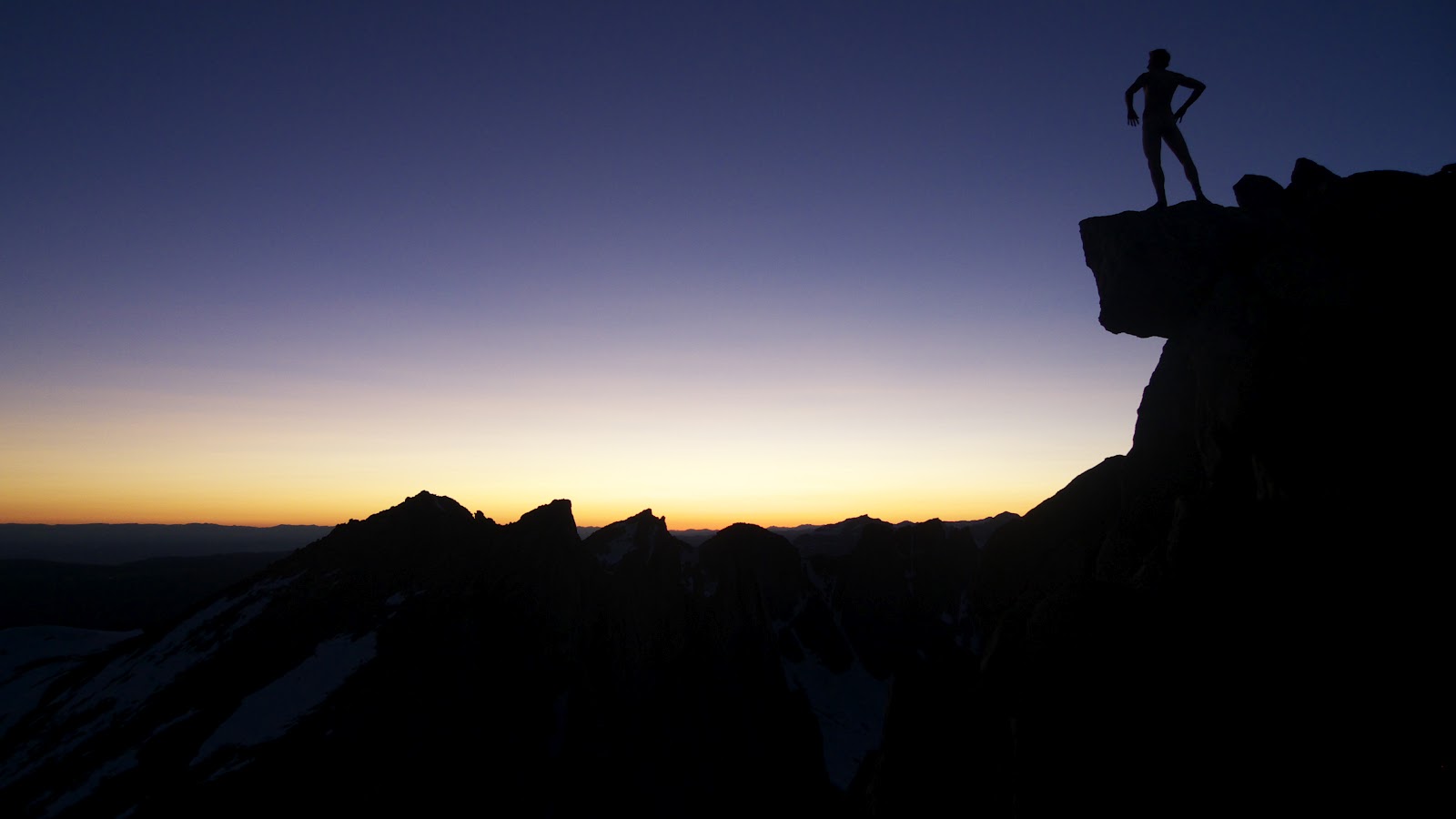
Topping out to the canyon rim at sunset. Photos courtesy T. Molnar
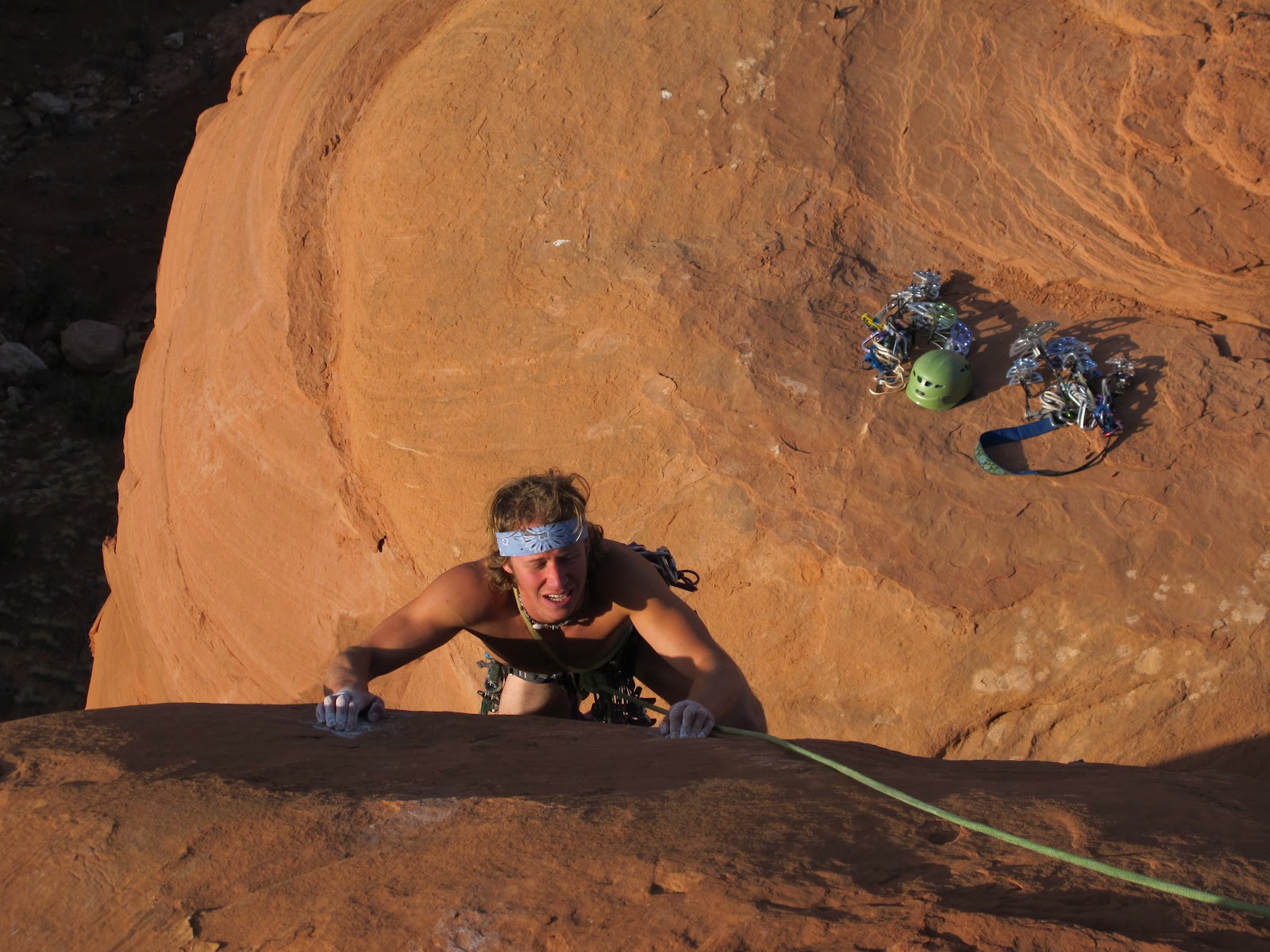
I guess this is what tired looks like





.JPG)